Clinical Pastoral Education (CPE)

Why CPE at HUSD?

     Howard University School of Divinity (HUSD) is one of the fourteen schools and colleges within Howard University. HUSD is a unique and irreplaceable graduate theological school that engrafts the spirit of excellence in learning and service. It is the only African-American theological school connected to a comprehensive category II research institution. For more than 150 years, HUSD has been training students for ministry in a wide variety of settings. We provide a theological education in a community driven by intellectual rigor, a passion for justice and freedom, and a relentless search for truth.

     During your online HUSD CPE journey, you will have the opportunity to care for people of various faith traditions, cultural backgrounds, and belief systems at a clinical site. You will also work with persons who have varying degrees of spiritual, belief, and faith formation and practice. In addition, as a member of the spiritual care team, you will also work alongside medical professionals, students, caregivers, and families. 

     The ACPE Certified Educator will be your guide throughout this program of self reflection on pastoral caregiving. You will also receive a CPE manual, which highlights the requirements and goals of your training. You will learn from your peers and instructors in a collegial, clinical, and inclusive environment. Examples of clinical sites include but are not limited to hospitals, hospice, prisons, social justice agencies, and educational settings in your local area.


2026 - 2027 Clinical Pastoral Education Units

We are now accepting applications for January 2027, due date is November 15, 2026. 

Specific class times and dates are forthcoming. 

Meet Our Instructor

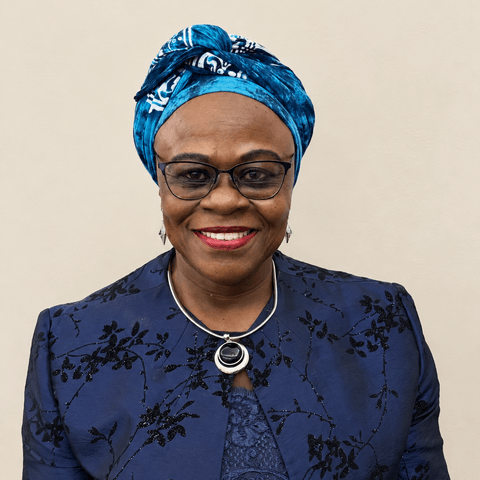
     Rev. Christinah Kwaramba, D.Min. is ordained with the United Methodist Church (UMC), certified as an educator through Association of Clinical Pastoral Education (ACPE). Dr. Kwaramba works as a chaplain with Vitas Health in Texas, Fort Worth and has worked as an ACPE educator in major hospitals in the DFW area. She has been a clinical pastoral educator (online program) 2022-2025 with the General Board of Higher Education and Ministry Center for Integrative Pastoral Care (CIPP) of the UMC. 


     Dr. Kwaramba, a native of Zimbabwe in Southern Africa, was a schoolteacher for 20+ years with formal education from the University of Zimbabwe, Seke Teacher’s College, Harare, (Bachelor of Education); Africa University—Faculty of Theology, (Master’s in Divinity)-Zimbabwe; Southern Methodist University Perkins School of Theology (Master of Theological Studies-Dallas, TX, USA; Texas Christian University Brite Divinity School (Doctor of Ministry: Pastoral Theology and Pastoral Care) Fort Worth, TX, USA, ACPE Certified Educator, USA.  Dr. Kwaramba’s project, "Gender Conflicts and the Church: Pastoral Care with Immigrant African Zimbabwean Women;" Dr. Kwaramba calls this constituency, the “Zimbabwean Diaspora.” What does it mean to be an effective pastor or chaplain and offer pastoral care to women who migrated to the USA and/western countries? Dr. Kwaramba’s focus is on how issues of gender roles and the conflicts that arise therein might be addressed through offering a “needs-based ministry” to this constituency of immigrant women. This gender role conflict impact, that Dr. Kwaramba is raising in her project is a pastoral theology and care issue where pastoral theology is to be understood as faith and practice in a world community.


     Dr. Kwaramba, as a post-colonial theologian, born and raised in a colonial Rhodesia, finds her pride in her two children who are both doctors in the USA, whom she raised as a widow, alone, after her husband died of cancer when their children were 12 and 8 years old. Their daughter who was 8 years old recently is a recent graduate of Yale University and is now a practicing oncologist and their then, 12-year-old son earned a Ph.D. in Chemical Engineering, and is working in the cannabis industries. 


     “I am because we are…… since we are, therefore, I am.” by John Mbiti, grounds Dr. Kwaramba who thrives in community. Dr. Kwaramba also proposes a potential pastoral care solution to the problem, especially to the inherited theology that is part of the larger context. Is the church bringing life amidst the challenges inherited by this woman from her culture, religions, and dislocation? Clinical Pastoral Education (CPE) with its Action-Reflection-New Action model helps with wrestling with life realities through sharing our own stories in a more reflective and transformative way in diverse groups--(religion, denomination, culture, race, sexual orientation, place of origin, gender, education, class, married, single, etc.). Dr. Kwaramba CPE passion comes from her story and has grounded Dr. Kwaramba to her true authentic self as an African Zimbabwean woman, post-colonial theologian who resides in the in between spaces, by meeting people where they are. My passion is to empower minorities around the globe through the CPE process, to access their power and identity from within.

HUSD CPE Information

Online CPE Program Design

Curriculum

     HUSD offers a consortium model for its online CPE program and draws upon the rich particularity of the School’s posture in the Washington, DC area. A consortium model allows HUSD to curate a CPE program enables participants to participate in a variety of clinical site offerings. Including students in designing the curriculum is a pillar in our educational approach to adult learners. We invite students to consider topics they feel will help them meet the objectives, standards and outcomes, as well as their goals.  

     CPE is an action-reflection approach to learning, i.e., we engage in ministry or another program activity; we take time to reflect on what we learned through this experience; we engage in new action and seek to implement or practice the awareness of insight(s) we gained. Students often feel challenged to step out of their comfort zone and experience sides to themselves and/or others they haven’t quite felt or experienced before.

Written Requirements

     The written requirements for our programs at HUSD will ground students in their own hopes and goals for CPE. As a student-centered approach to learning, particularly within our School itself, our program acknowledges that the learning goals are different for different persons, and each unit of CPE adjusts to meet the different goals and needs of the current group of students. CPE is not a static field, but it is continually growing and developing. Educators and students learn more about ourselves as we learn in service with the people with whom we offer ministry. CPE students can expect to be called to a regular combination of action and reflection, service and consideration of that service and toward the aim of integrating what they know with who they are and who they are becoming as ministers.

     The specific writing requirements for the unit of CPE is discussed during the orientation week for the program. Students are invited to make full possible use of these writing opportunities. If the student feels like what they are doing is not productive, it is important for them to talk to their educator regarding such.


Application Requirements, Important Dates & Fees

We are now accepting applications for January 2027, due date is November 15, 2026. 
Specific class times and dates are forthcoming. 


Level I & Level II CPE Application
https://acpe.edu/education/cpe-students/cpe-application
Level I & Level II CPE Unit Requirements
  • 100 Classroom Hours (Online)
  • 300 Clinical Hours (Your local area) 
Upcoming Level I & Level II CPE Units 
15 Weeks
  • January – April 
10 Weeks 
  • May - July 
Level I & Level II Costs (Check or Money Order only)
  • Application Fee $100.00 (CPE Application Fee is Non-refundable)
  • Tuition $3000.00 per CPE Unit (Due by first day of class)

Application and Tuition fees must be mailed before the first day of class to
Howard University School of Divinity 
2900 Van Ness Street NW,  
Holy Cross Hall, Office #309
Washington, DC 20008 
202-806-0744
HUSDCPE@howard.edu 

If you have further questions, please email the HUSD CPE program administrator at HUSDCPE@howard.edu 

Association for Clinical Pastoral Education (ACPE): A Brief History

            Clinical Pastoral Education was conceived in the 1920’s by Dr. Richard C. Cabot as a method of learning pastoral practice in a clinical setting under supervision.  It was a time of ferment in many fields of professional education, including medical, social work and ministry. The approach was expanded by the Rev. Anton T. Boisen, a congregational minister who, among other places, studied at Chicago Theological Seminary and was a chaplain at Elgin State Hospital in Illinois. He began to include the case study method of theological inquiry: a study of “the living human documents.”

            As clinical pastoral education has developed over the years, other leaders have opened the doors to the integration into pastoral practice of knowledge from medicine, psychology and other behavioral sciences.  Helen Flanders Dunbar, Carl Rogers, Wayne Oates, Seward Hiltner, Carroll Wise, George Polk, Howard Clinebell, John Patton and Teresa Snorton, to name a very few, have been instrumental in the evolution of the practice. That early background is documented by Protestant men primarily, and Protestant male expression was predominated in early CPE. It was not until after decades of experience, development and practice of clinical pastoral education within several organized but uncoordinated groups that the ACPE, Inc. (ACPE) was formed in 1967.  The ACPE resulted from the merger of The Institute of Pastoral Care, Inc., The Council for Clinical Training, Inc., and the Association of Clinical Pastoral Educators, and it drew upon the functions of certification and accreditation from the Lutheran Council in the U.S.A.

            ACPE today is the standard-setting, accrediting, certifying, resource agency in the field of clinical pastoral education to centers and supervisors who offer training programs and certify men and women as supervisors to conduce these programs.  The organization conducts periodic reviews of both the hospital as an educational center and the performance of the supervisors in order to ensure observation of and compliance with the Standards of ACPE.  ACPE is in compliance with the standards of the U.S. Department of Education. Further, ACPE is the only agency recognized by the United States Department of Education (USDE) to accredit programs of Clinical Pastoral Education (CPE) in the United States. ACPE currently accredits over 300 CPE programs offered in hospitals, prisons, churches, seminaries, community-based organizations, and other settings across the United States.

During the last 10-20 years, ACPE has become increasingly more diverse in membership and leadership. ACPE as an education and service organization has a multi-cultural and international membership of persons and programs.

https://acpe.edu

HUSD CPE Press Release

CPE Program Administrator

Barbara A. Fears, MDiv, MTS, PhD
Howard University School of Divinity
Associate Professor of Religious Education
Director of Clinical Pastoral Education

Contact Information
HUSDCPE@howard.edu
202-997-7635